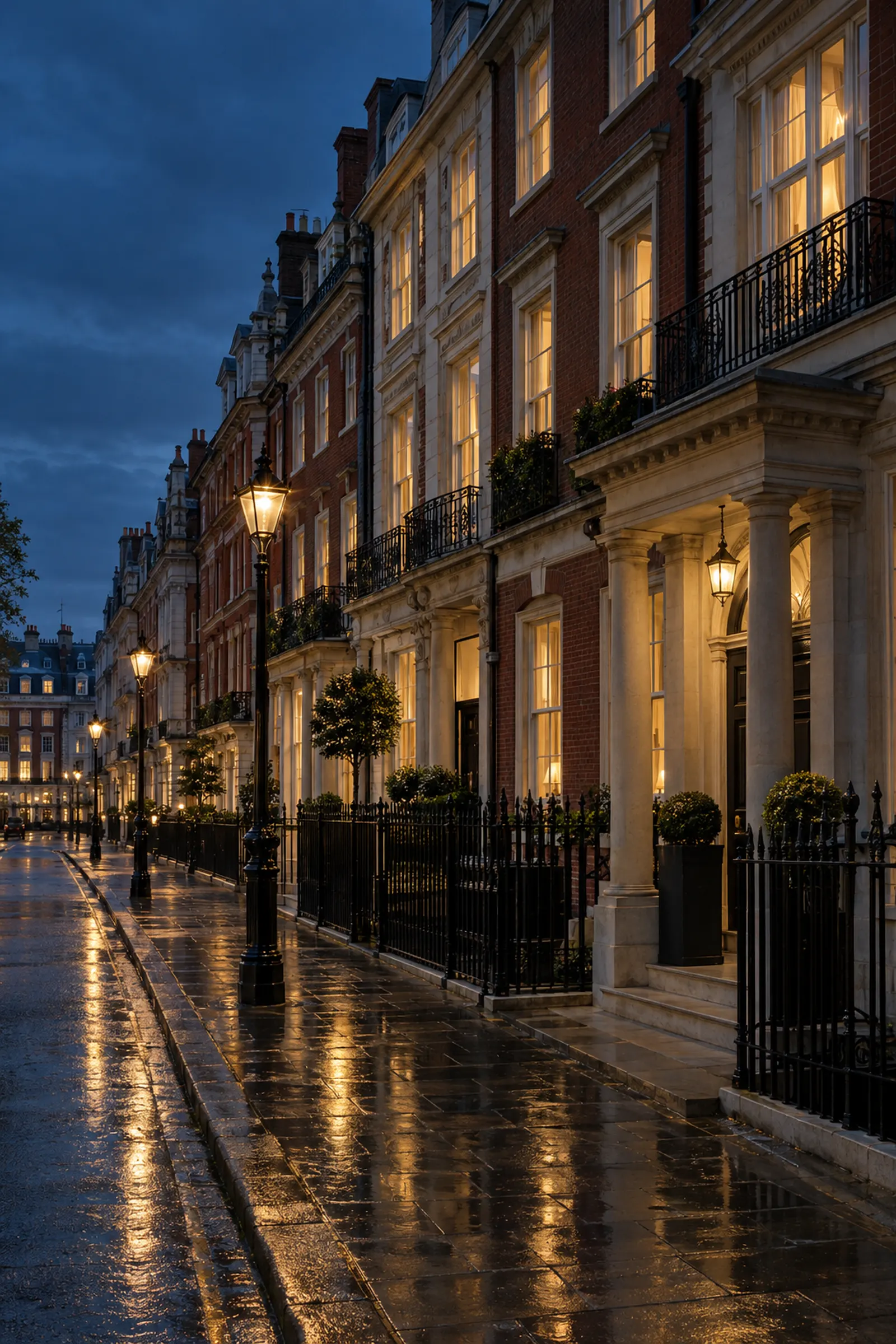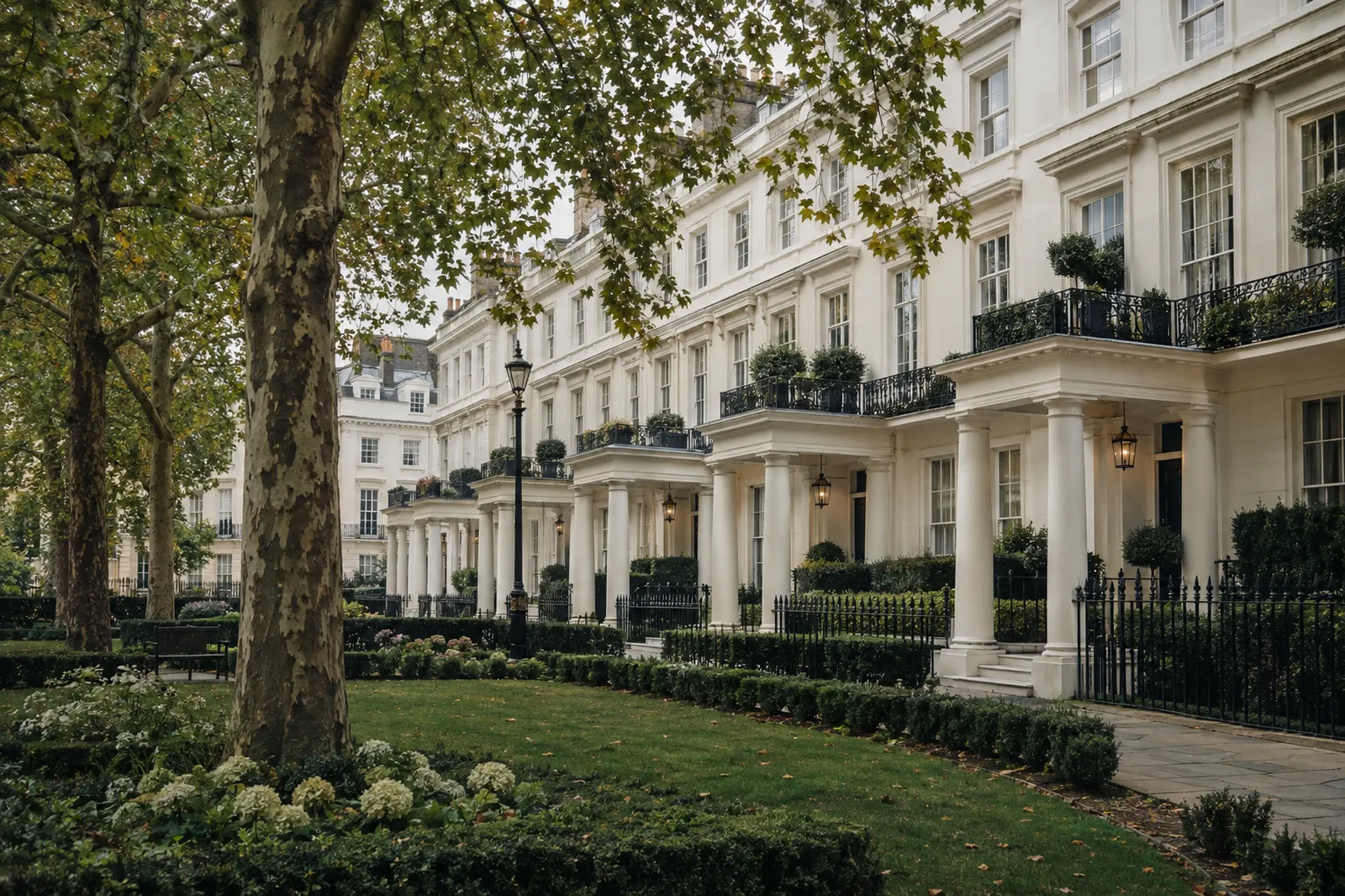
The headline figure from Knight Frank's latest research is worth pausing on. Prime Central London recorded 121 transactions above £10 million in the year to September 2026 — equal to the total for the whole of 2025 — and the total spend on those homes was 14% higher. At the same time, prices remain around 22% below 2015 levels. (Knight Frank, November 2026)
Put simply: the volume of serious money moving into the very top of the London market has held up, the average ticket has grown, and buyers are still paying less in real terms than they would have a decade ago.
A market where both sides have moved
Knight Frank describes this as a step change from both buyers and sellers — buyers now seeing the value in the market, and sellers now more realistic on price. That matches what we see on the ground. Owners who held out for 2015 pricing for several years are now willing to engage, and principals who had paused their London plans are back with clear briefs.
Pricing may be at a ten-year low, but the supply of perfectly positioned houses in excellent condition is finite.
That is Knight Frank's caveat, and it is the one that matters. Value exists across Prime Central London, but the best houses on the best garden squares remain scarce, and they rarely wait long.
Two kinds of buyer
The research identifies two dominant camps, and our own enquiries split the same way:
- Long-term holders planning to own for ten to fifteen years. They want best-in-class property — a strong underlying asset where their equity feels safe, such as a period house on a garden square.
- Value buyers who recognise that a major global city is available at a historic discount and want to secure a position before sentiment shifts.
A third theme runs through both: a younger, more globally mobile generation of wealth. These buyers often spend blocks of time each year in London and New York, see their purchases as homes to live in rather than pure investments, and are drawn to atmospheric neighbourhoods with a genuine sense of place. The great estates — Grosvenor in Mayfair and Belgravia, Cadogan in Chelsea and Howard de Walden in Marylebone — have invested heavily in exactly that village-like feel.
Where the value is
Knight Frank singles out Knightsbridge, Belgravia and parts of Chelsea as areas offering interesting value at present. We would add that value in this market is rarely about postcode alone. It sits in the specific building, the lease, the condition, the outlook — and in the willingness of a particular owner to transact quietly.
Lettings: a strong market getting stronger
The same research notes a surge in demand for luxury rentals, described as an incredibly strong market expected to keep growing as the next generation comes through. For owners, this supports income while holding for the long term. For incoming families, it means good homes let quickly and need a decisive approach.
What this means if you are considering London
- Prepare before you search. Clarity on budget, ownership structure, timing and non-negotiables lets you act when a scarce property appears.
- Look beyond the portals. Many of the most desirable homes change hands privately. Access depends on relationships and discretion.
- Benchmark relentlessly. At a ten-year pricing low, the opportunity is real — but so is the spread between a good purchase and a merely expensive one.
- Build the team early. Solicitors, surveyors, tax and wealth advisers working together from day one shorten timelines and protect value.
If you are weighing a move, an acquisition or a portfolio decision in Prime Central London, we would be glad to talk it through in confidence.
Figures and quotations are drawn from Knight Frank's "The new face of wealth" (4 November 2026). This note is general market commentary and not financial, tax or legal advice.